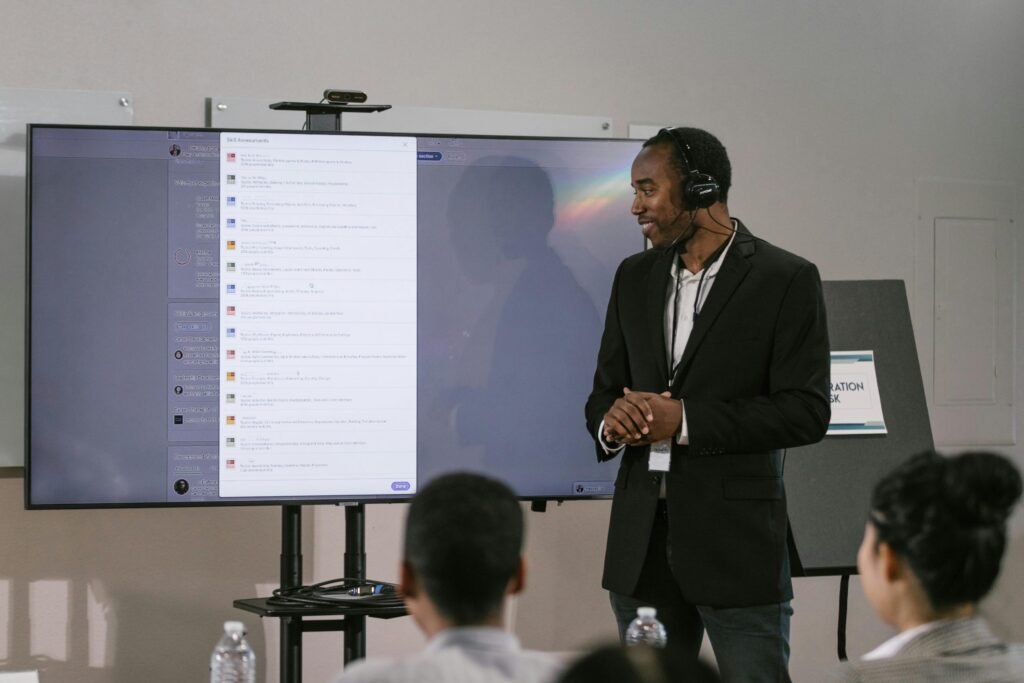
Instructional technology is more than just a shiny tool. When used intentionally, it can transform learning experiences. Purposeful technology integration increases learner engagement, enhances understanding, and improves retention.
Adult education instructors know that technology works best when it supports clear learning objectives, fosters active participation, and connects to real-world applications. Let’s explore seven (7) strategies for using technology as a purposeful learning tool.

1. Define the learning goal first.
Before choosing a tool, first determine what you want students to learn or accomplish. The technology should be the means to achieve that goal, not the goal itself. This keeps your lesson focused and intentional. For instance, if the goal is to improve collaborative problem-solving, a shared digital workspace like Google Docs or Padlet may be more effective than a video lecture.
2. Use technology for active engagement.
Avoid using technology for passive activities, such as long lectures and videos. Instead, choose tools that require students to interact, such as online polls, collaborative documents, or digital quizzes. Active participation cements new knowledge.
3. Provide clear, simple instructions.
Always introduce a new tool with a clear, step-by-step tutorial. Give learners time to explore and practice with it. This reduces technology-related frustration and ensures everyone can participate. Short tutorial videos, guided demonstrations, or sample activities can help learners gain confidence quickly.
4. Connect to Real-World Tools.
Choose technology that students are likely to encounter in their daily lives or future workplaces. For instance, practice using Google Docs for a writing assignment or a budgeting app for a math lesson. This shows the practical value of the skills they are building.

5. Leverage tech for differentiated learning.
Use technology to deliver content and support to students with different learning preferences. Adult learners have diverse backgrounds and learning preferences; some may prefer videos, others interactive exercises or self-paced modules. Adaptive learning platforms and online resources can help meet these varied needs.
6. Facilitate collaborative projects.
Use shared digital platforms, such as Padlet, PowerPoint, Google Apps, or Jamboard, for group brainstorming or collaborative project work. This allows students to collaborate and contribute ideas in a new way. It makes teamwork visible and dynamic.
7. Use technology to provide feedback.
Use online forms or quizzes that provide instant feedback. This helps students immediately see what they understand and where they need more practice. This instant feedback loop accelerates learning and allows instructors to adjust instruction as needed.
Applying instructional technology with a clear purpose transforms the classroom experience. This approach ensures every tool you use directly supports learning goals, encourages active participation, and provides practical skills.
Share these insights with your colleagues and help spread learner-centered teaching strategies. For more information, visit our YouTube channel and textbook page today.
Also, does your Curriculum Director, Instructional Specialist, or Lead Teacher know they can request samples and review CBL math, reading, or ESL textbooks by contacting us at teamcbl@cbledu.com? Connect with us today!